Posts

9 FLOOR EXERCISES THAT CAN BE DONE DAILY!

Image
  It turns out there are plenty of simple exercises you can do in the comfort of your own home—without any equipment—to build a lean and firm body while improving your habits and lifestyle. Best of all, the only thing you need is a floor so, unless you're reading this in outer space, you can take advantage of these every single day. Almost all of these exercises either start on your back (supine) or on the front of your body (prone), which is awesome for beginners or those dealing with injuries. 1 Planks Shutterstock It's clichéd, but when it comes to floor exercises, it's hard to beat old-fashioned planks. They're one of the most fundamental ab moves and they train your core to be stable, not to crunch or bend. Get into a plank position, resting on your forearms and keeping your body straight. Push your forearms into the ground to round your upper back and curl your hips in to keep your lower back flat. RELATED: 7 Strength Exercises for Women To Melt Hanging Belly Fat ...

WORKING THE ABS DOESN'T HAVE TO BE A DRAG!

Image
  Here are the seven best strength exercises to tone your belly from every angle: 1. Bicycle Crunches:    - Lie flat on the floor with your lower back pressed down.    - Place your hands lightly on either side of your head.    - Lift your knees to a 45-degree angle and perform a bicycle pedal motion.    - Touch your left elbow to your right knee, then your right elbow to your left knee.    - Repeat for the target repetitions. 2. Russian Twists:    - Start seated on the floor with knees bent and feet flat.    - Lean back slightly and lift your feet a few inches off the ground.    - Clasp your hands together at your chest and brace your abs.    - Rotate your upper body to the right, then to the left.    - Repeat for the target repetitions. 3. Planks:    - Start in a high pushup position with hands directly under your shoulders.    - Lower onto your forearms while ke...

ISOMETRICS FOR LEGS...WORKS VERY WELL!

Image
Isometric exercises have shown to be a better form of exercise for physical rehabilitation compared to dynamic training, especially for increasing muscle mass. Here are 12 leg isometric exercises: 1. Wall Sit:    - Lean against a wall with feet wider than shoulder width apart.    - Lower yourself and bend your knees to a 90-degree angle.    - Ensure knees and hips align with your toes.    - Stabilize your body by gripping the floor with your feet and resting your head and upper body against     the wall.    - Hold the position for 30-60 seconds, engaging your muscles. 2. Hamstring Hold:    - Sit with legs stretched out in front of you.    - Flex your foot, pointing toes towards the ceiling while keeping your heel on the ground.    - Lift your hips off the floor.    - Engage your core and press your glutes and the back of your legs into the ground.    - Hold for a few seconds and...

Coming Soon!

Image
 

STRENGTH TRAINING FOR WOMEN OVER 50!

Image
  Incorporating strength training into your regular exercise is an important part of maintaining a healthy and active lifestyle. Strength training is beneficial for people of all genders and age groups, but it can be especially important for women over 50. Hormonal shifts, decreased bone density, and muscle loss become more prevalent as women age, making them susceptible to health risks. Incorporating strength training into their fitness regimen may benefit women over 50 in these areas and more. In this article, we’ll delve into the science behind the benefits of strength training and offer practical tips, exercises, and safety recommendations to help women over 50 get started with a safe strength training program.   Benefits of Strength Training Strength training is a vital component of any well-rounded fitness routine, providing many benefits that are particularly relevant to women over 50 and older adults.  Here are a few of the benefits of strength training: Stre...

THE ALMIGHTY TRAP TRAINING!

Image
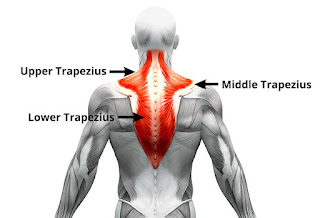
Ask a bodybuilder how he built his traps and he’ll simply shrug. Chances are, if you train traps at all, you simply grab a barbell or two dumbbells and move your shoulders up and down for a few sets at the end of your shoulder routine. In fact, there are many variations on the common shrug. We’re going to cover the best of those. But before then, we’ll do a quick trapezius anatomy lesson and then focus on the five most common traps training mistakes. Your trapezius is part of both your shoulders and back, and therefore can be worked with either. Piggybacking with broader workouts or ignored entirely, traps seldom get the honor of their own routine, and yet your trapezius is large, dramatic, and complex, bracketing your delts and neck and forming a kite on your upper back. By contrast, your biceps are puny and simple, and yet you surely have a biceps routine and dote on every curl. Don’t shrug off trapezius  TRAPEZIUS ANATOMY Your trapezius muscle (technically, two muscles: left and...