
THE 10 MINUTE LOWER BODY WORKOUT! WITH IMAGES
The 10-Minute Lower-Body Starter Plan
Four foundational moves to build real-world leg strength fast
If you’re new to training, the biggest mistake isn’t doing too little. It’s doing too much, too soon, with exercises that don’t carry over to daily life.
Lower-body strength drives everything: walking, climbing, balance, and joint protection. When the hips and legs are weak, the knees and back take the stress. When they’re strong, movement becomes easier and safer.
This ISOQUICK-style starter uses four simple patterns that train how your body actually works: squat, bridge, step, and stabilize. No machines. No long sessions. Just efficient strength you can feel quickly.
The 10-Minute Structure
Perform 10 controlled reps of each exercise.
Rest about 30–60 seconds.
Repeat for 2–3 rounds.
Total time: about 10 minutes.
Adjust reps or rest as needed. The goal is clean tension, not fatigue for its own sake.
1. Squat
The universal sit-stand strength pattern


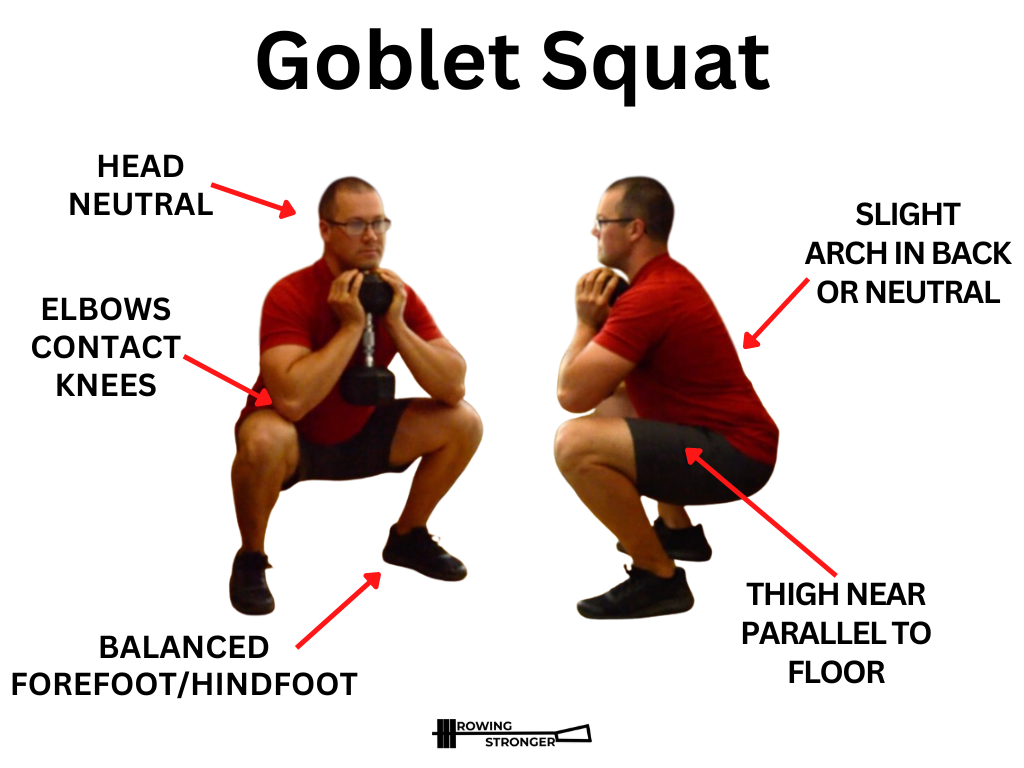

Stand with feet about hip-width.
Push hips back first, then bend knees.
Lower until thighs approach parallel or your safe range.
Drive through the feet to stand tall.
ISOQUICK cues
Hips move back before knees
Weight stays mid-foot
Spine neutral
Chest relaxed, not lifted
Make it easier
Sit fully onto a chair, then stand.
Make it harder
Hold a light weight at chest level.
Why it matters
Squat strength predicts independence, fall resistance, and knee resilience.
2. Glute Bridge
Posterior chain activation without joint stress
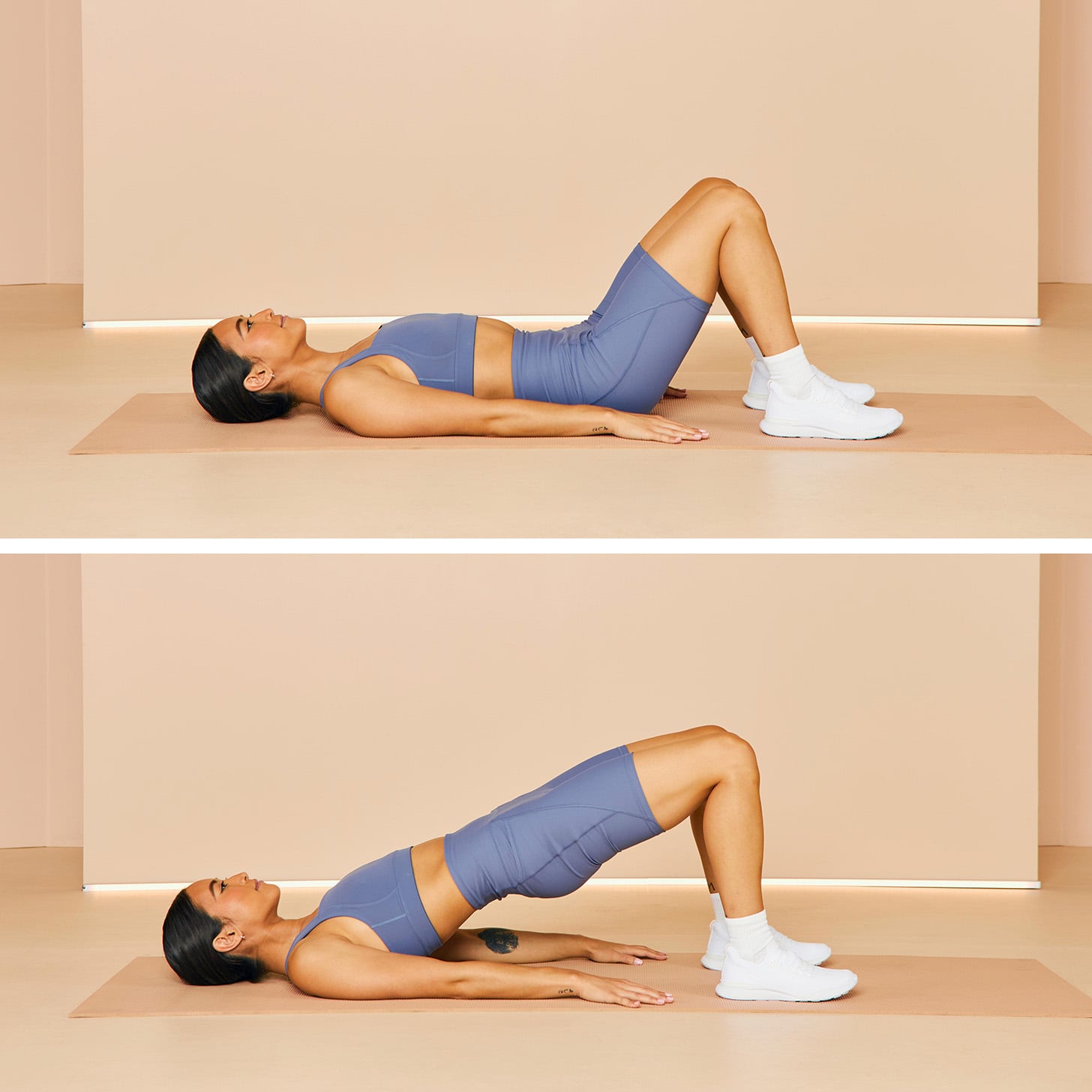


Lie on your back, knees bent, feet flat.
Brace lightly.
Squeeze glutes and lift hips.
Pause briefly at the top.
Lower with control.
ISOQUICK cues
Movement from hips, not lower back
Ribs down
Glutes initiate lift
Make it easier
Small lift or bed version.
Make it harder
Mini-band above knees or single-leg version.
Why it matters
Strong glutes stabilize the pelvis and unload the knees and spine.
3. Step-Up
Real-world climbing strength and balance

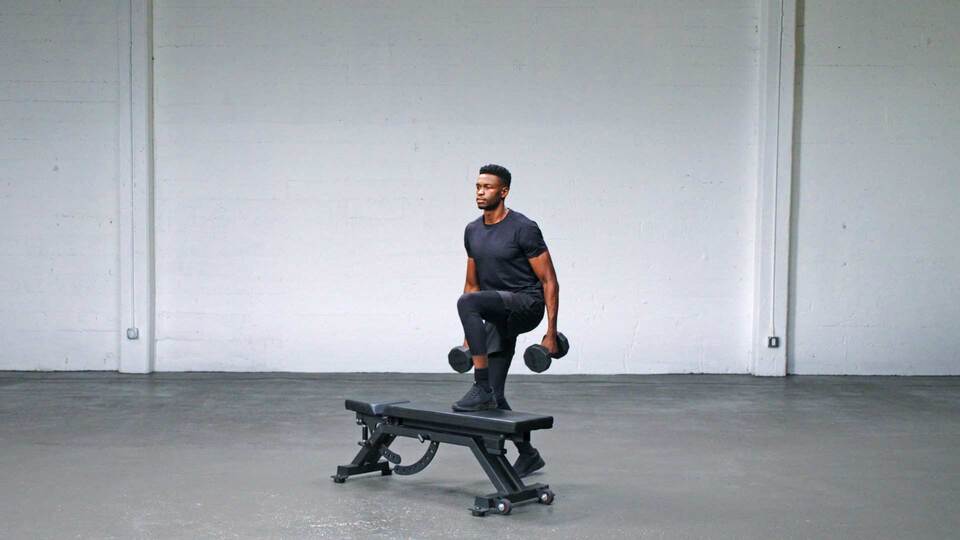

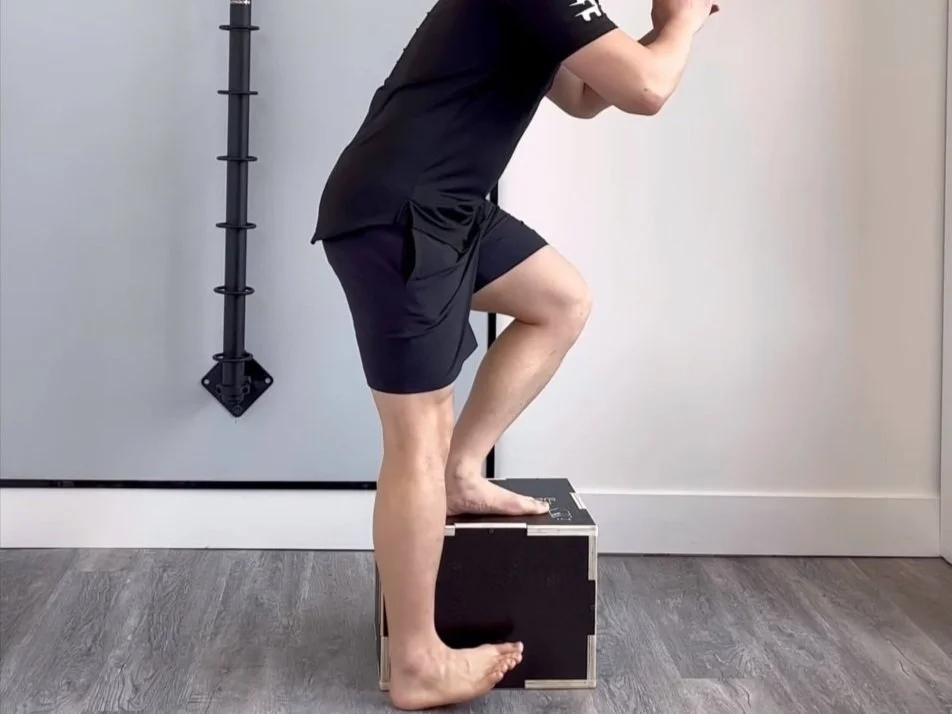
Stand tall facing a step.
Place full foot on step.
Drive through the stepping leg to rise.
Control the descent.
ISOQUICK cues
Whole foot contact
Upright torso
Lead leg does the work
Make it easier
Lower step or light hand support.
Make it harder
Add light dumbbells.
Why it matters
Step strength directly transfers to stairs, curbs, and uneven terrain.
4. Fire Hydrant
Hip stability and lateral control


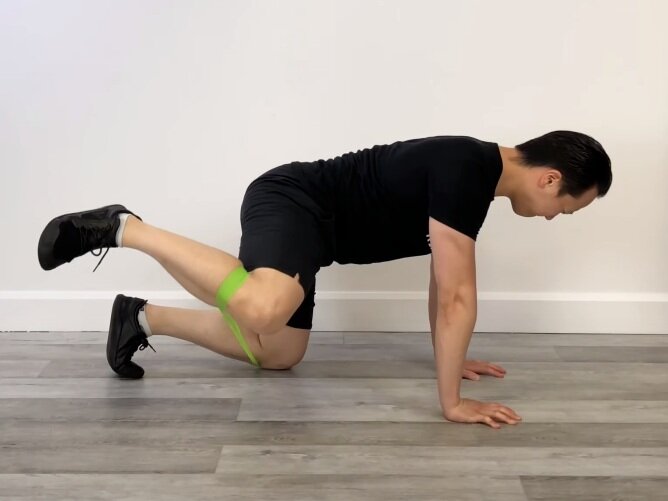
Hands and knees position.
Brace gently.
Lift bent leg out to the side.
Keep hips level.
Lower slowly.
ISOQUICK cues
Pelvis stays square
Small controlled lift
No torso sway
Make it easier
Standing version with wall support.
Make it harder
Mini-band above knees.
Why it matters
Hip stabilizers protect knees and improve balance.
Why This 10-Minute Plan Works
Beginners don’t need complexity. They need patterns.
Squat trains vertical force
Bridge trains hip drive
Step-up trains unilateral strength
Hydrant trains stability
Together they cover the essential lower-body mechanics that most machines isolate poorly.
Short, focused sessions also improve adherence. Consistency beats duration. Even one 10-minute set daily produces measurable strength gains in beginners.
Safety Note
These movements are generally joint-friendly, but medical clearance is recommended if you have injury history, surgery, or chronic pain. Individual coaching improves technique and progression.
ISOQUICK Takeaway
You don’t need an hour.
You need the right tension, in the right patterns, done consistently.
Four moves.
Ten minutes.
Stronger legs that actually work in real life.


Comments
Post a Comment